Mighty Typeface Review: A Handmade Script for Modern Brand Identity
I was staring at a blank Figma file, trying to build a brand board for a new artisanal skincare line. The brief called for something that felt organic and handcrafted but still legible enough for product labels. I had already tried three other script fonts, but they all felt either too rigid or too messy. That’s when I pulled up Mighty, described as a new variant of a handmade script typeface from the Script Amp collection. It wasn’t the first time I’d seen it in a font library, but it was the first time I actually put it to work in a realistic design scenario.
If you are a graphic designer, creative studio owner, or small business entrepreneur looking to add character to your visual assets, Mighty deserves a closer look. After testing this typeface across logo drafts, packaging mockups, and social media layouts, here is my honest take on how it performs in real-world branding projects.
The Visual Personality of Mighty
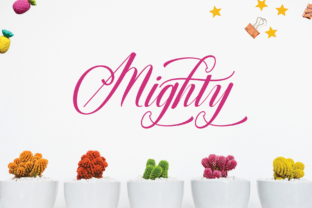
Mighty strikes a balance between casual handwritten charm and structured readability. As a handmade script, it avoids the overly calligraphic stiffness of traditional serif scripts while steering clear of the chaotic energy found in many brush-style fonts. The strokes have a natural variation, mimicking the pressure of a marker or brush pen, which gives it an immediate sense of authenticity.
When I first placed Mighty on a dark background for a potential café logo concept, it popped with warmth. It doesn’t scream for attention like a bold display font might; instead, it invites the viewer in. This makes it particularly effective for brands that want to communicate approachability, creativity, and a human touch. Whether you are designing for a bakery, a boutique shop, or a personal blog, Mighty brings a relaxed yet professional vibe that feels current without being trendy.
Testing Mighty in Logo Design and Branding
The true test of any font is how it holds up when scaled down and used as a primary brand mark. I took Mighty into a logo design exercise for a fictional local restaurant. Using it as the main headline for the restaurant name worked surprisingly well. The letterforms are distinct enough to maintain recognition even at smaller sizes, provided you don’t get too carried away with kerning.
However, Mighty shines brightest when used as a display font or headline font. In my experience, it is not ideal for long body text. Trying to set paragraphs in Mighty quickly becomes tiring for the reader because of its decorative nature. Instead, use it for short phrases, brand names, or taglines. For instance, placing "Fresh & Local" in Mighty above a clean sans-serif description created a beautiful visual hierarchy. The contrast between the playful script and the neutral supporting typeface kept the design grounded.
One specific observation: when using Mighty for logo design, pay close attention to the spacing. Because it is a connected script, some letters naturally flow into one another, but others sit independently. Tightening the tracking slightly can help unify the wordmark, giving it a more cohesive and premium feel. This is especially important if you plan to use the logo on packaging design elements where space is limited.
Packaging, Labels, and Print Assets
I moved Mighty onto a packaging mockup for a handmade soap brand. The goal was to make the label look artisanal but trustworthy. Mighty worked beautifully here. Its handwritten quality reinforced the idea that the product was crafted by hand, not mass-produced in a factory. When paired with earthy tones and simple line art, the font elevated the entire composition.
This versatility extends to other print assets as well. I tested Mighty on business cards, wedding invitations, and flyers. On a wedding invitation, it added a touch of elegance without feeling stuffy. On a flyer for a creative workshop, it grabbed attention effectively. The font’s ability to adapt to different contexts—while maintaining its core personality—is one of its strongest selling points. It acts as a versatile creative font that can serve as an accent, a decorative element, or even a primary identifier depending on the layout.
For editorial design or magazine covers, Mighty can be used to highlight key quotes or section headers. Its unique shape adds visual interest that breaks up the monotony of standard text blocks. Just remember to limit its use to short bursts of text to ensure readability remains high.
Font Pairing Strategies
To get the most out of Mighty, you need to pair it wisely. Since Mighty is a script font with strong personality, it needs a calm partner to let it breathe. Here are a few reliable combinations:
- Mighty + Sans Serif: Pairing Mighty with a clean, modern sans serif font (like Helvetica or Montserrat) creates a contemporary look. The sans serif provides structure and readability for body copy, while Mighty handles the emotional heavy lifting in headlines.
- Mighty + Serif: For a more classic or literary feel, try pairing Mighty with a transitional serif. This combination works well for book covers, editorial layouts, or brands that want to evoke tradition mixed with modernity.
- Mighty + Neutral Script: If you need two scripts, choose a simpler, less decorative one for secondary text. Avoid pairing Mighty with another busy script, as this will create visual clutter and reduce legibility.
Technical Details and Usability
From a technical standpoint, Mighty offers several features that make it a practical choice for designers. The font family includes multiple weights and styles, allowing for greater flexibility in modern typography systems. I appreciated the inclusion of alternates and ligatures, which can add extra flair to specific words or initials. These small details can significantly enhance the brand identity of a project, making it feel custom-tailored rather than generic.
The file formats included are standard for desktop publishing, ensuring compatibility with major design software. However, if you are integrating Mighty into a digital workflow, check whether webfont versions are available. Using the correct format for web design ensures that your typography renders consistently across devices, which is crucial for maintaining a professional web design aesthetic.
Also worth noting is the multilingual support. Depending on the specific version you download, check the character set to ensure it supports the languages you need. For global brands or diverse audiences, this can be a deciding factor in your selection process.
Limitations and Best Practices
No font is perfect, and Mighty has its limitations. As mentioned, it is not suitable for long-form content. Using it for body text in articles, manuals, or dense informational pages will hinder readability and frustrate users. Stick to using Mighty for headings, subheadings, logos, and short promotional text.
Additionally, consider the context of your audience. While Mighty is great for creative industries, crafts, and lifestyle brands, it may not be appropriate for formal corporate environments, legal firms, or highly technical sectors where seriousness and clarity are paramount. In those cases, a more traditional serif font or sans serif font would be a safer bet.
Before committing to Mighty for final client work, always conduct thorough testing. Create mockups on various backgrounds, scale the text to different sizes, and review it on both mobile and desktop screens. This step helps you identify any potential issues with legibility or contrast before the project goes live.
Final Verdict
Mighty is a solid addition to any designer’s toolkit. It delivers on its promise as a handmade script typeface with a modern twist. Its ability to convey warmth, creativity, and authenticity makes it an excellent choice for brand identity projects that need a human touch. Whether you are designing social media graphics, product labels, or a full commercial font suite for a startup, Mighty offers the versatility and style needed to stand out.
Just remember to use it responsibly. Respect its strengths as a display and headline font, pair it with complementary typefaces, and always verify your commercial font licensing rights. With proper usage, Mighty can elevate your designs from ordinary to exceptional, helping your brand connect with audiences on a deeper, more personal level.